 In a previous post it was noted that Africans have generally not killed each other because of differences in religious beliefs, as is currently being reported in Central African Republic (CAR). This ethic is currently being manifested by a church in the CAR as the church shelters Muslims inside the church building. This is an excellent demonstration of that point. This ethic tells me that what is going on in the CAR is far more than a religious conflict, as the news media repeatedly report.
Thursday, February 13, 2014
Towards an African Interreligious Ethic in the CAR
In a previous post it was noted that Africans have generally not killed each other because of differences in religious beliefs, as is currently being reported in Central African Republic (CAR). This ethic is currently being manifested by a church in the CAR as the church shelters Muslims inside the church building. This is an excellent demonstration of that point. This ethic tells me that what is going on in the CAR is far more than a religious conflict, as the news media repeatedly report.

Wednesday, February 12, 2014
Pentecostalism and Politics in Cameroon
While Pentecostal preachers have been predicting the rise and fall of presidents in countries like Nigeria and Ghana, Pentecostal leadership in Cameroon has been pretty muted. But that seems to be changing not because Pentecostals in Cameroon have suddenly realized the importance of politics in Cameroon but because Cameroon's dictator for 31 years, Paul Biya, has taken the fight to them by closing down what his government describes as illegal churches, especially in Cameroon's capital, Yaoundé, and one of the major cities of the country, Bamenda. In Cameroon, churches are supposed to be registered with the government in order to operate.
While the legal troubles of these churches seem to be the public reason given for shutting them down, some of the activities of some Pentecostal preachers have been given as reason for shutting down these churches. Some members of society have complained about how some Pentecostal preachers are discouraging their members from going to the hospital or taking medication when they are ill. Members of these churches are being urged to rely on God for healing. Some have even died in churches as these preachers attempt to perform exorcism on them. Paul Biya's government therefore sees these churches as a danger to society and has thus shut down many of them.
Leaders of these churches have of course not allowed their churches to be shut down without a fight. They have gone out marching against the government of Paul Biya, arguing that the real reason why their churches are being shut down has nothing to do with the alleged unholy activities of these churches. They say that they are being persecuted because their churches have been criticizing the government. However, churches that have been criticizing Paul Biya in Cameroon are generally not closed down. The offending leaders of these churches are often killed or hounded out of the country. I would have called renown Cameroonian theologian, Jean-Marc Ela, to testify to this if he were still alive. Is Paul Biya using a new tactic now? Whatever the case, it is interesting that the voices of Pentecostal preachers have not been quite vocal against the government in Cameroon until Paul Biya started shutting down their churches.
While the legal troubles of these churches seem to be the public reason given for shutting them down, some of the activities of some Pentecostal preachers have been given as reason for shutting down these churches. Some members of society have complained about how some Pentecostal preachers are discouraging their members from going to the hospital or taking medication when they are ill. Members of these churches are being urged to rely on God for healing. Some have even died in churches as these preachers attempt to perform exorcism on them. Paul Biya's government therefore sees these churches as a danger to society and has thus shut down many of them.
Leaders of these churches have of course not allowed their churches to be shut down without a fight. They have gone out marching against the government of Paul Biya, arguing that the real reason why their churches are being shut down has nothing to do with the alleged unholy activities of these churches. They say that they are being persecuted because their churches have been criticizing the government. However, churches that have been criticizing Paul Biya in Cameroon are generally not closed down. The offending leaders of these churches are often killed or hounded out of the country. I would have called renown Cameroonian theologian, Jean-Marc Ela, to testify to this if he were still alive. Is Paul Biya using a new tactic now? Whatever the case, it is interesting that the voices of Pentecostal preachers have not been quite vocal against the government in Cameroon until Paul Biya started shutting down their churches.
Sunday, February 9, 2014
Angolagate: The Swiss Banks and the Fleecing of Africa
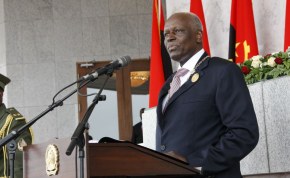 That stolen money from African countries, by the ruling elite and their international accomplices, often end up in Swiss Banks, is no secret. The case of Angola is just a recent manifestation of a now normal process.
Saturday, February 8, 2014
Gays Are Not the Problem In Africa
It seems that the recent interest in targeting gay people for annihilation in some African countries is intended to draw attention away from the serious issues with which these countries need to grapple. Of all the analyses of the issues that are dragging us to the ground, hardly has the presence of gay people been cited as one of our pressing problems. Yet, following the prominence that the issue has gained in the West, many African leaders have turned their attention to it. Thus, bills prohibiting gay people from being part of society are being revived and enacted all over the place. That our children need decent classrooms, that our wives need to give birth without the threat of death hanging over their heads, that famine does not need to be visiting us every year, that our roads need to be paved, are hardly seen as pressing issues. That robbers passing for leaders are looting the coffers of our countries and perpetrating the marginalization of our people is hardly seen as pressing. In fact, the robbers themselves are the ones busy diverting attention away from themselves to gay people. It is time we see the current fascination with gay issues in Africa for the diversion that it is. Nigeria, Cameroon, Uganda, and other African countries persecuting gay people need to know that this diversionary tactic will not work. Our problem is not the gays; it is the corruption and the stagnation that is cutting the life expectancy of our people. The last time I checked, gay people were not responsible for these problems.
Africans Do Not Kill Because Of Religion
A phenomenon that has arisen in some African countries in recent times is what might be described as "religious violence" - the harming of others because they belong or do not belong to particular religions. As Toyin Falola, the Nigerian historian at the University of Texas at Austin has argued, Africans have hardly killed each other because of religious disagreements. In fact, a central tenet of traditional religious cosmology is that the very purpose of religion is to serve human flourishing so that religion that calls for the execution of those who are not part of that religion is essentially irreligious. That is, something cannot be called religion in traditional African cosmology if it promotes or perpetuates the killing of others. It is only with the advent of monotheistic religions in the continent that Africans have been taught that it is alright to kill people who do not belong to your particular religious affiliation. And so we now have the carnage of Central Africa, where Christians think that it is alright to kill Muslims and Muslims also think it is great to kill Christians - not to mention the shame of Boko Haram and Al Shabab. It is a shame that religions that claimed to be bringing civilization to the continent have instead been teaching the people how to be intolerant killers.
Source:
Toyin Falola, “The Spread of Islam and Christianity and their Impact on Religious Pluralism in Africa,” Dialogue & Alliance vol. 2 no. 4 (Winter 1988-89).
Source:
Toyin Falola, “The Spread of Islam and Christianity and their Impact on Religious Pluralism in Africa,” Dialogue & Alliance vol. 2 no. 4 (Winter 1988-89).
Sunday, February 2, 2014
Subscribe to:
Posts (Atom)